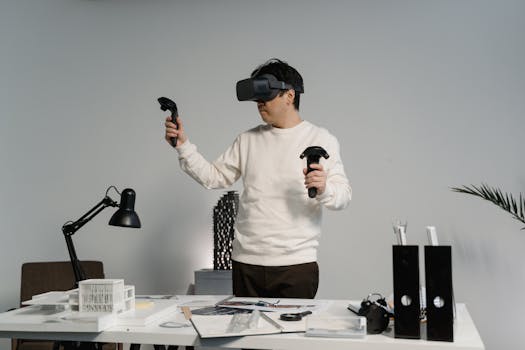
Virtual Reality (VR) is no longer the stuff of science fiction; it's a thriving, dynamic sector that continues to revolutionize gaming. For game developers, the rapid pace of innovation in VR presents both exciting opportunities and unique challenges. In 2023 and beyond, the trends shaping VR game development are defined by technological breakthroughs, evolving user expectations, and the push for more immersive, accessible experiences. This article dives deep into the latest trends in virtual reality for game developers, offering insight into what's shaping the future of gameplay—and how developers can stay ahead.
The Rise of Standalone VR Headsets and Cross-Platform Support
Just a few years ago, VR gaming required sophisticated setups tethered to high-end PCs, limiting accessibility and reach. Now, standalone VR headsets like Meta Quest 3 and Pico 4 are dominating the market. According to Statista, standalone VR headsets accounted for nearly 80% of global VR headset shipments in 2023, underscoring a major shift in user preference.
These devices deliver impressive processing power, wireless freedom, and increasing affordability. For game developers, this means a much larger potential audience. It also calls for optimization: games must perform well on less powerful hardware compared to PC-tethered systems.
.png)
Cross-platform compatibility is also a growing trend. Leading VR games such as "Beat Saber" and "Population: One" have embraced cross-play, allowing users on different devices to interact seamlessly. Developers are increasingly using engines like Unity and Unreal Engine, which support multi-platform builds, to maximize reach.
Sensory Immersion: Haptics, Hand Tracking, and Eye Tracking
Immersion is at the heart of VR's appeal, and modern trends are pushing boundaries beyond visuals and sound. Advanced haptic feedback systems are becoming more commonplace, with devices like the bHaptics TactSuit and SenseGlove offering tactile sensations that mirror in-game actions. For example, the TactSuit provides over 40 individually controllable vibration points, letting players feel everything from gunfire to raindrops.
Hand tracking is another breakthrough, with Meta Quest 2 and 3 supporting controller-free interaction. According to research from SuperData, games utilizing hand tracking see a 25% higher player retention rate, thanks to the intuitive experience. This technology eliminates the need for physical controllers, making VR more accessible and engaging.
Eye tracking is emerging as a game-changer, especially with devices like the PlayStation VR2. Foveated rendering—a technique that uses eye tracking to focus processing power on where the player is looking—enables higher fidelity graphics without straining hardware. This leads to smoother performance and more realistic visuals, and also opens new gameplay possibilities, such as gaze-based targeting or dialogue.
Social and Collaborative VR Gaming Experiences
VR is no longer a solitary pursuit. Social interaction is a significant driver of engagement, with 64% of VR users reporting multiplayer features as a top reason for using VR, according to a 2023 survey by Newzoo. Games like "VRChat" and "Rec Room" have built thriving communities, enabling players to interact, create, and share experiences.
Developers are integrating more robust social features, from voice chat to customizable avatars and shared spaces. Collaborative gameplay, such as team-based puzzle solving or co-op campaigns, is becoming standard. The pandemic-era surge in remote interaction has only accelerated this trend, pushing developers to innovate around presence, communication, and safety in virtual spaces.
Expanding Horizons: VR Beyond Entertainment
While gaming remains VR's mainstay, developers are increasingly expanding into adjacent genres and industries. Educational games like "Wander" turn geography lessons into globe-trotting adventures, while titles like "Richie’s Plank Experience" blend entertainment with exposure therapy for acrophobia.
Serious games are gaining traction in sectors like healthcare, architecture, and training. For example, "Oxford VR" provides therapy tools for mental health, and "Surgical Theater" offers VR-based surgical planning. As these applications diversify, game developers with VR expertise find themselves in demand beyond entertainment, opening new revenue streams and creative possibilities.
Key Technologies and Engines Leading VR Game Development
Choosing the right technology stack is crucial for successful VR games. Unity and Unreal Engine remain the dominant platforms, with Unity powering over 60% of all VR/AR content, according to Unity Technologies. Both engines offer extensive VR support, including ready-made plugins, asset libraries, and optimized workflows.
Emerging tools like Godot Engine are also gaining popularity due to open-source flexibility and growing VR support. Proprietary SDKs, such as Meta XR SDK and SteamVR, provide device-specific features that help developers squeeze maximum performance from hardware.
Below is a comparison of the most popular engines and SDKs for VR game development:
| Engine/SDK | Market Share (2023) | Supported Devices | Key Features |
|---|---|---|---|
| Unity | ~60% | Meta, Pico, HTC, Windows MR, PlayStation VR | Cross-platform, large asset store, C# scripting, strong VR community |
| Unreal Engine | ~30% | All major VR headsets | High-fidelity graphics, Blueprint visual scripting, robust physics engine |
| Godot Engine | ~5% | Meta, HTC, Windows MR | Open source, lightweight, growing VR support, GDScript |
| Meta XR SDK | N/A | Meta Quest series | Hand tracking, passthrough, device-specific APIs |
| SteamVR | N/A | Valve Index, HTC Vive, others | Room-scale tracking, open ecosystem, mod support |
Accessibility and Inclusivity in VR Game Design
As VR becomes mainstream, accessibility is a top priority. Developers are focusing on making VR experiences playable by a broader audience, including those with mobility, vision, or hearing challenges.
Recent advancements include customizable control schemes, subtitles and audio cues, and adjustable comfort settings to minimize motion sickness. The "Half-Life: Alyx" team, for instance, implemented multiple locomotion options (teleportation, continuous movement, and shift) to accommodate different players' needs.
In 2023, the International Game Developers Association (IGDA) reported that VR games with strong accessibility features saw a 19% increase in user satisfaction scores. Forward-thinking developers also engage with disabled gamers during playtesting, ensuring real-world usability.
Mixed Reality and the Future of Blended Experiences
Mixed Reality (MR)—the blending of digital content with the real world—is rapidly gaining ground. Meta Quest 3’s advanced passthrough cameras allow players to see their surroundings while interacting with digital elements, unlocking new possibilities for gameplay.
Games are beginning to use MR for “safe zone” awareness, in-home navigation, and interactive storytelling layered over real-world objects. As hardware improves, the line between VR and MR continues to blur, giving developers a bigger canvas for creativity.
A notable example is "Demeo," which uses MR to let players move a virtual game board into their living room, combining the fun of tabletop gaming with digital interactivity. Expect to see more titles blending VR and MR as technology matures.
Final Thoughts: Embracing the Future of VR Game Development
The virtual reality landscape is evolving at breakneck speed, and game developers play a critical role in shaping what comes next. With standalone headsets expanding the audience, sensory technologies deepening immersion, and new genres pushing boundaries, those who stay informed and adaptable will thrive.
Whether you’re an indie creator or part of a major studio, understanding these trends—and leveraging the right tools—can position your games for success in the ever-expanding VR universe. As VR hardware and software continue to advance, the potential for creative, inclusive, and impactful experiences is greater than ever.